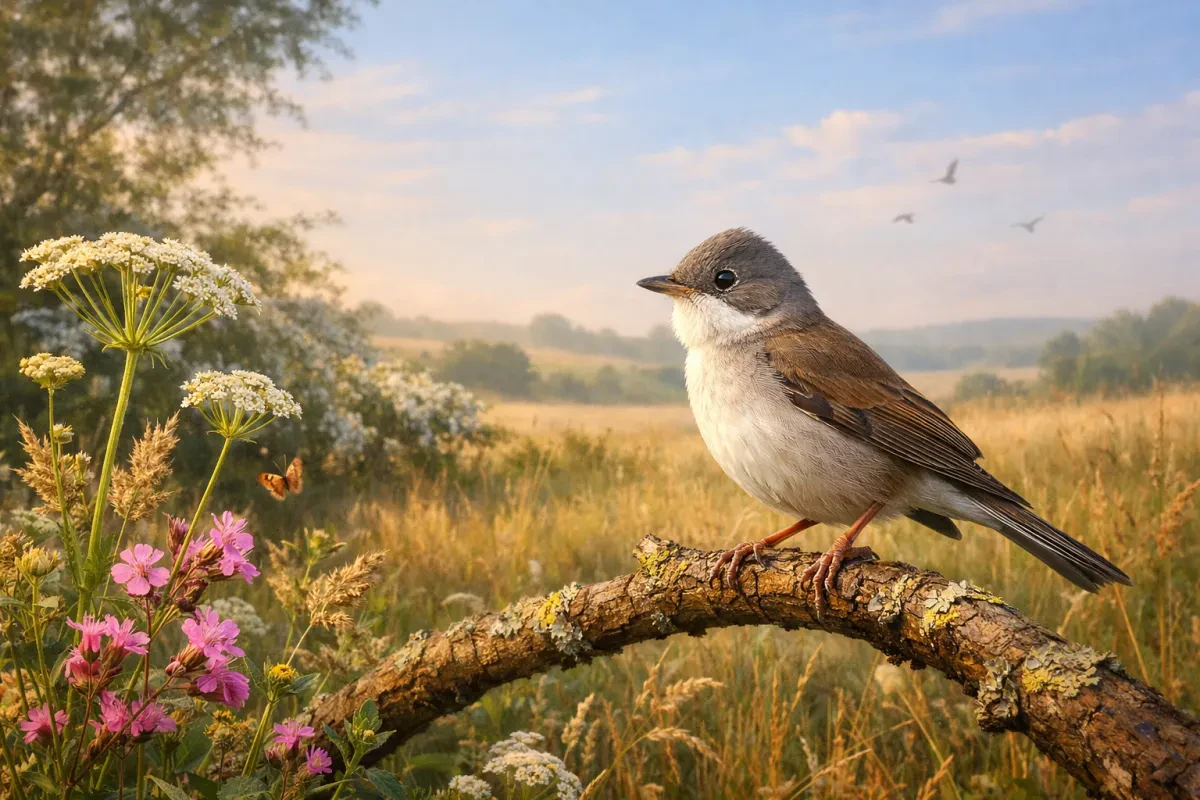
The British Whitethroat Bird is a real charmer. You often spot this small songbird flitting about in hedgerows and scrubby areas during the spring and summer months. With its soft gray-brown feathers and striking white throat, it’s hard not to notice when one is around. Its lively behavior makes it a delight for birdwatchers and nature lovers alike.
So, what can you expect when you encounter a British Whitethroat Bird? For starters, their melodious song fills the air with sweet notes that can light up any day. These little guys are known for their energetic flitting and can often be seen darting between branches or hopping around on the ground. Watching them is an absolute joy, especially during mating season when they show off their impressive agility.
If you’re looking to attract the British Whitethroat Bird to your garden, consider planting native shrubs and hedges. They love to nest in dense foliage and generally prefer an area with plenty of cover. This not only adds some life to your garden but also gives you a front-row seat to watch these stunning birds up close.
Keep an ear out for their distinct calls and enjoy the vibrant energy they bring. The British Whitethroat Bird isn’t just another feathered friend; it’s a wonderful addition to our wildlife and a reminder of the beauty surrounding us in nature.
Where to Spot Whitethroats in the Wild
If you’re eager to catch a glimpse of the British Whitethroat Bird, you’re in for a treat! These charming little birds love to hang out in specific habitats, making them easier to spot if you know where to look. Generally, you’ll find them in hedgerows, scrub, and open woodlands. They enjoy areas where there are plenty of bushes and brambles to hide in while they search for food.
Visit rural areas during the spring and summer months for the best chance of spotting these birds. They’re often found flitting around in low bushes, singing their cheerful tunes. If you’re near farmland or good old-fashioned country lanes, keep your eyes peeled. Whitethroats are often more vocal during this time, which makes them easier to locate.
Don’t forget to look near water sources, like rivers and ponds! Whitethroats are known to frequent these areas as they provide plenty of places for insects to thrive. As you walk along, keep your binoculars handy. They love to perch on top of shrubs, where you can enjoy their beautiful grey-brown feathers and distinct white throat. If you hear a sweet, scratchy song, you might just be in the presence of the British Whitethroat Bird!
Getting out early in the morning or late in the evening can increase your chances of seeing them. They tend to be more active and out in the open during these times. So grab your walking shoes and a trusty pair of binoculars, and head out to search for these delightful birds. Happy birdwatching!

Ceramic Bird Bath for Wild Birds Outdoors
Attract beautiful British birds to your garden with this stylish and durable ceramic bird bath
Product information
$15.67
Product Review Score
4.9 out of 5 stars
135 reviewsProduct links
Fun Facts About Whitethroat Behavior
The British Whitethroat Bird is pretty interesting when it comes to its behavior. For starters, these little guys are known for their quirky song. You might hear them singing from a bush or a tree, and their melodious tune is a mix of scratchy notes and flute-like sounds. It’s a sweet serenade that can brighten anyone's day!
Another cool thing about the British Whitethroat Bird is how they build their nests. They prefer to set up camp in dense, thorny bushes, which helps keep their homes safe from predators. The female usually does all the hard work, weaving grass, leaves, and feathers into a cozy cup for her chicks. It’s fascinating to see how dedicated they are to creating a safe space for their little ones.
These birds are also quite territorial. During the breeding season, male British Whitethroat Birds will defend their patch vigorously. They’ll chase intruders away with impressive aerial displays. If you spot one hopping around and puffing up its chest, it’s likely showing off to keep others at bay. Talk about being assertive!
When it comes to feeding, the British Whitethroat Bird loves to munch on insects and berries. They’re active foragers, often seen flitting between branches or scouring the undergrowth. This feeding behavior not only helps them thrive but also plays an essential role in keeping the environment healthy by controlling insect populations.

Folding Pocket Guide to South African Birds
Discover the unique beauty of South African birds with this handy folding pocket guide
Product information
$8.10
Product Review Score
4.65 out of 5 stars
130 reviewsProduct links
Tips for Feeding Whitethroats in Your Garden
If you want to attract the beautiful British Whitethroat Bird to your garden, you'll want to set up the right feeding station. Whitethroats love insects, so think about offering tasty treats that mimic their natural diet. You can try mealworms, both live and dried, as they’re a hit with these little guys. They’re easy to find in bird stores or even online.
Don't forget about providing fresh fruits. Whitethroats enjoy berries and fruits like apples and pears. Cut them up into smaller pieces and place them on a bird table or on a flat surface. They'll appreciate the easy snack, and it’s a great way to add some color to your garden while attracting birds.
Water is just as important as food. Place a shallow bird bath in your garden for the British Whitethroat Bird to drink and bathe in. Make sure to change the water regularly to keep it clean. A little bit of movement in the water can catch their interest too, so consider adding some pebbles or a fountain feature.
Ready to attract the British Whitethroat Bird? Create a mixed environment with some shrubs and small trees for them to hide in. They feel safer when they have cover. Plus, they love to forage in areas with a bit of undergrowth. The more natural your garden looks, the better chance you'll have of spotting these lovely little songbirds!
Finally, be patient! It might take a bit of time for the Whitethroats to find your garden. Once they do, you'll be treated to their cheerful songs and lively antics. Enjoy watching them as they make your garden their home!