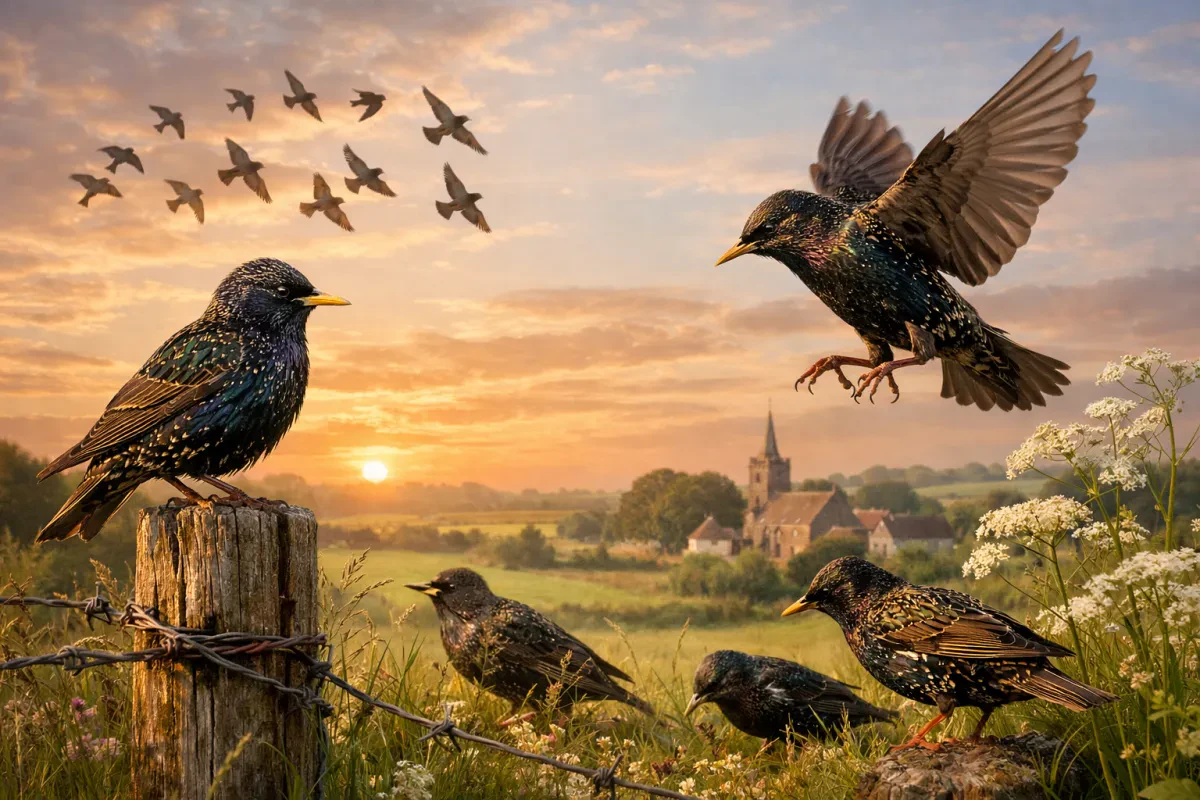
Spotting a starling can be a real treat! These birds are bursting with personality and you’ll often find them hanging out in parks or gardens. With their striking iridescent feathers that shimmer in the sunlight, they really catch your eye. If you’re keen on British Starling identification, keep an eye out for their sleek shape and that lovely, pointed tail!
Another thing to note is their behavior. Starlings love to chat with each other, and their chatter can fill the air, especially in groups. Listen for their cheerful whistles and various clicks. When they're in a mob, it's like nature’s own concert! They're also quite sociable, so don’t be surprised to see them hanging out with friends like blackbirds or sparrows.
If you’re looking to spot one, the best time is just before sunset. That's when they gather in flocks, performing those amazing aerial displays called murmurations. Watching them swoop and dive together is unforgettable. So grab your binoculars, find a comfy spot, and enjoy the show!
For anyone diving into British Starling identification, remember their distinct yellow beak and that compact size. In winter, you might see them with speckles all over, adding to their charm. So, whether you’re a beginner or an experienced birdwatcher, starlings are fun birds to learn about and spot!
Recognizing Different Starling Colours
When it comes to British Starling identification, colour is one of the most eye-catching features to consider. These birds don’t just come in one shade; their plumage gives off a beautiful array of tones and hues throughout the year. In the summer, starlings flaunt a glossy green and purple sheen. Their iridescence can truly stand out in the sunlight, making them a joy to watch as they flit about.
As winter approaches, their colours shift. The bright, vibrant hues give way to a more muted, speckled appearance. You'll notice shades of brown and gray take over, with white spots creating a unique look. This transformation can sometimes confuse those new to British Starling identification, but it’s all part of their charm and adaptability. Pay attention to these changes throughout the seasons to help sharpen your skills.
Don't forget about juvenile starlings! They have their own distinct colour palette that's different from the adults. These fledglings sport a more understated brownish colour with flecks of white. Watching them grow and change as the seasons pass is fascinating and rewarding for birdwatchers of all skill levels.
To make your birdwatching easier, look out for their short, stout bodies and pointed wings, even when colours vary. Their ability to change colours is one of the many reasons British Starling identification is such an engaging hobby. Keep your binoculars handy, and enjoy the variety these beautiful birds bring to your local landscape.
Understanding Starling Sounds and Calls
Understanding the sounds and calls of British starlings is key to mastering British Starling identification. These birds are known for their incredible vocal abilities, which can often be mistaken for other species. If you want to recognize a starling by its call, listening closely can be a rewarding experience.
Starlings have a variety of sounds that they use for communication. Their most common call is a short, sharp "chack" sound. You might also hear a musical warble that can shift in pitch and tone, mimicking other birds and even mechanical noises. This imitative talent helps them blend into their surroundings, but it can also confuse birdwatchers trying to identify them.
These birds are also social creatures and often gather in large flocks. During the winter months, you’ll likely hear their chorus of chatter as they roost together. Pay attention to the way their calls change when they’re in a group compared to when they’re alone. A lone starling might sound a bit more timid, while a flock will produce a raucous, lively symphony.
If you’re hoping to improve your British Starling identification skills, consider using apps or audio recordings to practice. Listening to different calls can help train your ears. With some patience and practice, you’ll soon be able to spot these delightful birds just by their sounds. So grab your binoculars and be ready for some birdwatching fun!
Tips for Observing Starlings in Nature
Spotting starlings in the wild can be a delightful experience, especially when you know what to look for. For British Starling identification, keep these tips in mind to ensure you get the most out of your birdwatching adventures.
First off, timing is everything. Early mornings or late afternoons are prime times to catch these birds in action. They’re usually busy foraging for food or socializing with their flock during these hours. Look for them in parks, fields, and even urban areas where food is plentiful.
Next, consider their habitat. Starlings love open spaces, but they also enjoy perching on fences, trees, and power lines. If you're lucky, you might witness their stunning aerial displays. These vibrant little acrobats often gather in large flocks, which can create magnificent shapes in the sky as they twist and turn together. This behavior is known as murmurations, and it's a must-see!
Don’t forget to bring your binoculars or a camera. A good pair of binoculars helps you spot the subtle differences in plumage that’ll make British Starling identification easier. Check out their glossy feathers; in sunlight, they can show a beautiful iridescent sheen. Be patient and watch closely, and you might even hear their varied calls and whistles.
Lastly, connect with others who love birdwatching. Join local birdwatching groups or social media communities where you can share sightings and tips. The more you learn from experienced birders, the better your British Starling identification skills will become!