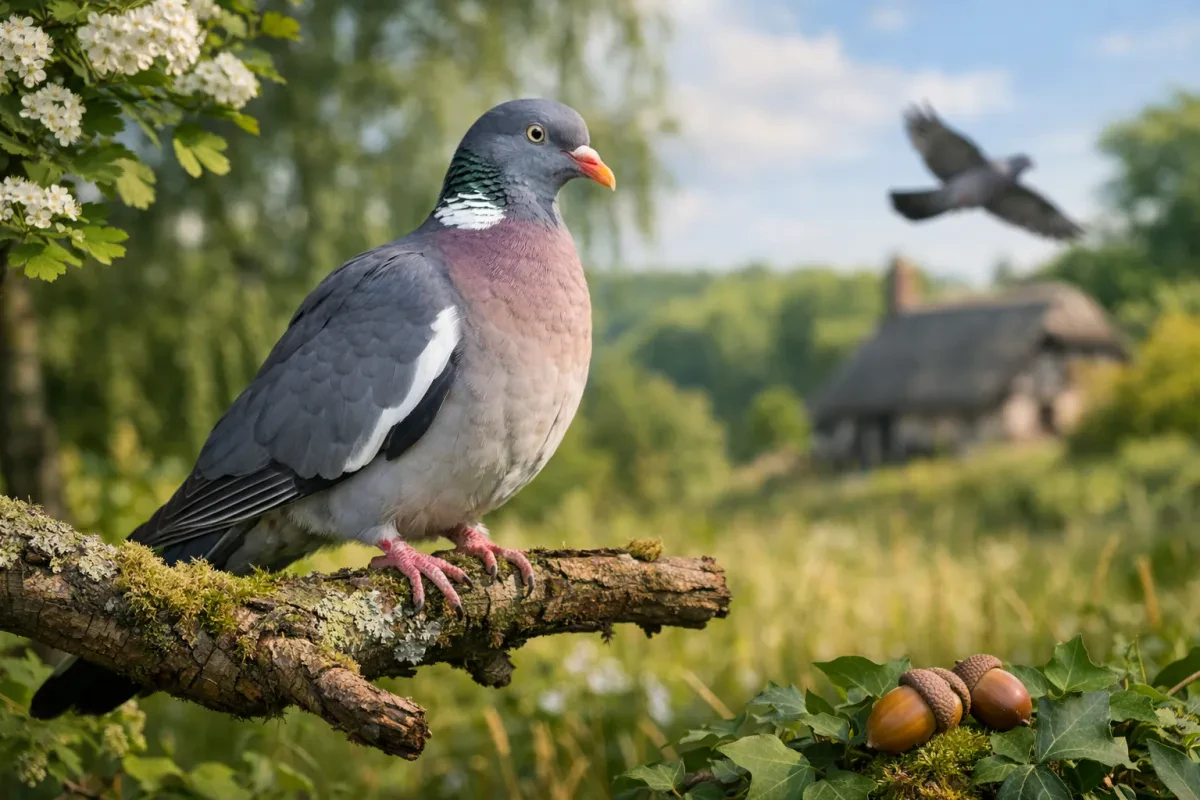
Did you know that British wood pigeons are some of the largest pigeons you'll spot in the UK? They can weigh up to 500 grams and measure about 38-44 cm in length. Those plump bodies and beautiful iridescent feathers really make them stand out! If you see a pigeon that’s predominantly gray with a splash of white on the neck, you can bet it’s a wood pigeon.
One of the most interesting British Wood Pigeon Facts is their diet. These birds are pretty versatile eaters. They enjoy munching on seeds, fruits, and even leaves. You might catch them snacking in your garden, so don’t be surprised if you see these chunky fellas enjoying your bird feeders!
British wood pigeons are social creatures. You’ll usually see them hanging around in pairs or small flocks, especially during the breeding season. Their soft, cooing calls can be quite charming and are a lovely sound to wake up to in the morning. Interestingly, they can produce a variety of sounds, including a gentle 'coo-coo' which isn’t just for show; it helps them communicate with each other.
Another fun British Wood Pigeon Fact is their impressive flying skills. They are known to be strong fliers and can reach speeds of up to 77 km/h. That’s faster than most people think! Their agility helps them escape predators and navigate through tight spaces in urban areas.
Where to Find Wood Pigeons Easily
If you're on the lookout for British wood pigeons, you're in for a treat! These birds are pretty common across the UK, so you won’t have to search too hard. They love to hang out in a variety of places, making it easy for you to spot them. Here’s where you can find them.
Wood pigeons often frequent parks and gardens. If you have a backyard, try putting out some birdseed. They’re big fans of seeds and will undoubtedly come by for a snack. Alternatively, visit local parks where trees and greenery abound. The dappled shade of trees creates a perfect hangout spot for these birds.
Another great spot is farmland. If you take a stroll in rural areas, keep an eye out for them in fields. They tend to munch on crops, especially young shoots. Just remember to be respectful of farmers and their lands while you watch.
Don’t forget about woodlands! British wood pigeons love to perch on branches and can often be seen in the trees, cooing away. A simple walk in a wood or forest can lead to many sightings.
In your quest for British wood pigeon facts, remember to listen! Their soft cooing can guide you right to them. With a little patience, you’ll have no trouble finding these charming birds in their natural habitats.
What Do Wood Pigeons Eat
When it comes to the diet of wood pigeons, they have a pretty varied menu. These birds are mostly vegetarians, but they do have a few tasty treats they’ll munch on when the opportunity arises. You’ll usually find them feasting on seeds, grains, and fruits. They really enjoy a mix of crops, so if you're in a farming area, keep your eyes peeled for them around fields.
Seeds and grains make up a big part of their diet. They love sunflower seeds, wheat, and barley, but they also enjoy some leftover crops. If you’re feeding the birds in your garden, giving them wild bird seeds is a great way to attract wood pigeons. They’ll happily snack on whatever you put out!
Fruits are also a favorite. They’ll go crazy for berries, apples, and even plums if they can find them. If you have fruit trees or berry bushes in your garden, don’t be surprised if some wood pigeons stop by for a tasty snack. And just to add a little fun, they sometimes munch on tender leaves and young shoots as well.
While they do eat a bit of protein, it's not their main focus. You might catch them pecking at snails or insects now and then, especially in spring when they’re raising their chicks. This little protein boost helps them stay strong and healthy, which is crucial for raising their young ones.
Interesting Wood Pigeon Behavior Insights
When it comes to British Wood Pigeons, their behavior is both fascinating and fun to observe. These birds are known for their unique cooing sounds, especially during the breeding season. The deep, throaty cooing can be heard from miles away and often starts early in the morning. If you've got a garden or park nearby, you might find yourself serenaded by these charming birds.
One of the most interesting British Wood Pigeon facts involves their feeding habits. They are primarily herbivores and love munching on seeds, fruits, and leaves. You might spot them in your backyard, pecking at scattered seeds or enjoying a snack from bird feeders. They can adapt well to urban areas, so don't be surprised if they show up all around town!
Social interactions among Wood Pigeons can be quite complex. They often gather in flocks, especially in fields or around gardens. You'll see them performing a delightful courtship dance, which includes a bit of bowing and puffing out their chests. This behavior not only helps them attract mates but also strengthens their social bonds.
Another fun fact is how Wood Pigeons tend to nest. They build their nests in trees or shrubs using twigs, often creating a messy platform. You won't find them building elaborate homes. Instead, their nests are pretty basic, designed for quick setups to raise their young, which is a smart strategy for survival.